
'Prime Minister Modi's message from Tuesday's meeting with industrialists was loud and clear: stand up India, stand by start-ups, take risk and invest,' says CII chief Sumit Mazumder.

In May, Satpal Singh, who runs a dairy business with three buffaloes in Jewar, near Noida, was worried about the steep spike in input costs. Singh said dry fodder rates, which cost Rs 1,500-2000 per tractor trolley last year, were quoting at Rs 4,500-5,000. The price of other cattle feed ingredients (that include mustard meal and similar mixes) had also gone up from Rs 2,000 per quintal to Rs 3,100-3,200 per quintal.
In the broader markets, the BSE Midcap and Smallcap indices extended gains and were up over 1% each

While hybrids, CNG and biofuels found favour in 2018 among many carmakers including Maruti Suzuki, Mercedes-Benz, Toyota and Honda, others such as M&M and Tata Motors have shown full faith in electric vehicles.

While the widespread feeling is that employment growth has been sluggish, some argue that, since sabka vikas slogan will most probably not deliver, Mr Modi and the BJP are going in for an unambiguous strategy of Hindu consolidation, says Subir Roy.

Consumption was the major driver, contributing 58.8 per cent to GDP growth

Market cap of government companies has remained unchanged in the past 8 years.

'You have to be a total anti-national bozo to shut down the Nokia plant in Sriperumbudur, which was the first large manufacturing plant for mobile phones in India.' 'Why was the unit shut down? Because of somebody's ego.'
Like everything else, the structure of banks may change, and banks may depend more on digital technologies and artificial intelligence for dealing with both their customers and employees.
The UN Conference on Trade and Development (UNCTAD) said in a report on Monday that a lower but positive economic growth in India in the post-Covid-19 pandemic period and India's large market will continue to attract market-seeking investments to the country. The World Investment Report 2020 by UNCTAD said that India was the 9th largest recipient of FDI in 2019, with 51 billion dollars of inflows during the year, an increase from the 42 billion dollars of FDI received in 2018, when India ranked 12 among the top 20 host economies in the world.
.jpg)
A stumbling economy, a falling currency and high inflation, plus weak consumer demand, mean more and more become excess baggage.

For growth in export, continuous gain in productivity is essential.

Infosys, Wipro may follow suit as investors eye a piece of the large cash kitty as growth slows.

Overall slowdown in the economy and growing volumes of unbranded generic medicines in the domestic market are behind poor sales.
Normal monsoon makes FMCG, automobile and consumer durable companies optimistic about growth prospects

Trade between India and Indonesia stands at $20 billion.

The government on Friday announced several relief measures including deferring one-time registration fee, lifting the ban on purchase of petrol/diesel vehicles by its departments and allowing higher depreciation, but it remained non-committal on the demand for a reduction in GST rates.

Majority expect economy to slow down, but are satisfied with Modi govt's performance.

Global gold demand hit an 11-year low in 2020 at 3,759.6 tonnes, mainly due to a weak October-December quarter and the COVID-19 related disruptions across the world driving a muted consumer sentiment throughout the year, the World Gold Council (WGC) said in a report. The overall consumer demand during 2019 was at 4,386.4 tonnes, while in 2009 the overall demand was at 3,385.8 tonnes, according the WGC's 2020 Gold Demand Trends report. Global gold demand dropped by 28 per cent year-on-year (YoY) to 783.4 tonnes in the fourth quarter compared to 1,082.9 tonnes during the October-December period of 2019, the report stated.

This is the BJP's first full-year Budget.

'The hour is very late, and the choice between triumph and tragedy knocks at our door,' says Ajay Shah.
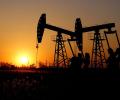
India, the world's third-largest energy consumer and importer, on Wednesday warned of high oil prices hurting the nascent and fragile global economic recovery and floated an idea of long-term supply contracts that provide predictable and stable pricing. Speaking at the India Energy Forum by CERAWeek, Oil Minister Hardeep Singh Puri said there was a mismatch between demand for oil and the supplies producers such as OPEC+ were making and there was a case for raising the production. The world, he said, needs "predictable, stable and affordable" prices for it to recover back to pre-pandemic levels.

Most analysts expect growth in the sales of Nifty-50 companies to decelerate, albeit marginally, in the quarter ended December compared to the corresponding period of 2013-14, with metals and real estate companies pulling down earnings.

The Chinese economy is not collapsing, it is shifting to different growth drivers which the old metrics used to judge China do not pick up.

The growth in imports was led by product categories such as diagnostic items, ultra-sonogram machines, MRI and ECG apparatus, syringes with needles, suture needles, digital thermometers, malaria diagnostic kits, and hearing aids.

CLSA managing director & equity strategist Christopher Wood, and executive director Mahesh Nandurkar tell Puneet Wadhwa that the markets could give a return of around 10 per cent from the current level over the next year.
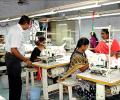
With China and Bangladesh losing their edge, textile exports from Tirupur are rising once again, turning the city into a job magnet.

After demonetisation, sharp fall in PE valuation offers an attractive entry point into some quality names and these 3 FMCG companies are expected to see the fastest growth in earnings with at least 15 per cent upside potential

Though the NITI Aayog did not give its estimates for the required GDP growth at constant prices, economists pegged it at 9 per cent, a feat not seen since the GDP series was revised with 2011-12 as the base year.

March and April payrolls were revised to show 32,000 more jobs.

India attracted an estimated $49 billion FDI in 2019, a 16 per cent increase from the $42 billion recorded in 2018.

There are also signs that the private sector investment cycle is slowly coming back, as capacity utilisation figures across industry continue to slowly creep up. A pickup in investments will front load profitability, says Akash Prakash.

Apply the 'insurgent' tests on what Ambani, Ramdev and Agarwal have done of late, and you will start seeing the similarities rather than obvious differences of industry, upbringing or social station, says Shailesh Dobhal.

The WPI has been in the negative zone since November.

Data issued by Siam shows sale of PVs (cars, vans and utility vehicles) grew 14.3 per cent to 275,417 vehicles.

The manufacturing sector, which constitutes over 75 per cent of the index, declined by 2 per cent in October as against a growth of 9.9 per cent a year ago.

Indirect tax collections saw only a meagre 3.5 per cent growth, as mop-up from Customs fell sharply on account of a drop in imports.

While customers in metro cities are still buying cars, quick growth is likely only from upcountry markets, where highways and roads are being built, and discretionary income and aspirations are rising.

'The current crisis is one of incomes, driven by poor job growth, agrarian distress and poor investment sentiment,' notes Harsh Pati Singhania, director, JK Organisation.

Finance Minister expects rate cut by RBI.
